
NRI & Divorce
Foreign Divorce Decree Not Valid in India Without Fair Opportunity
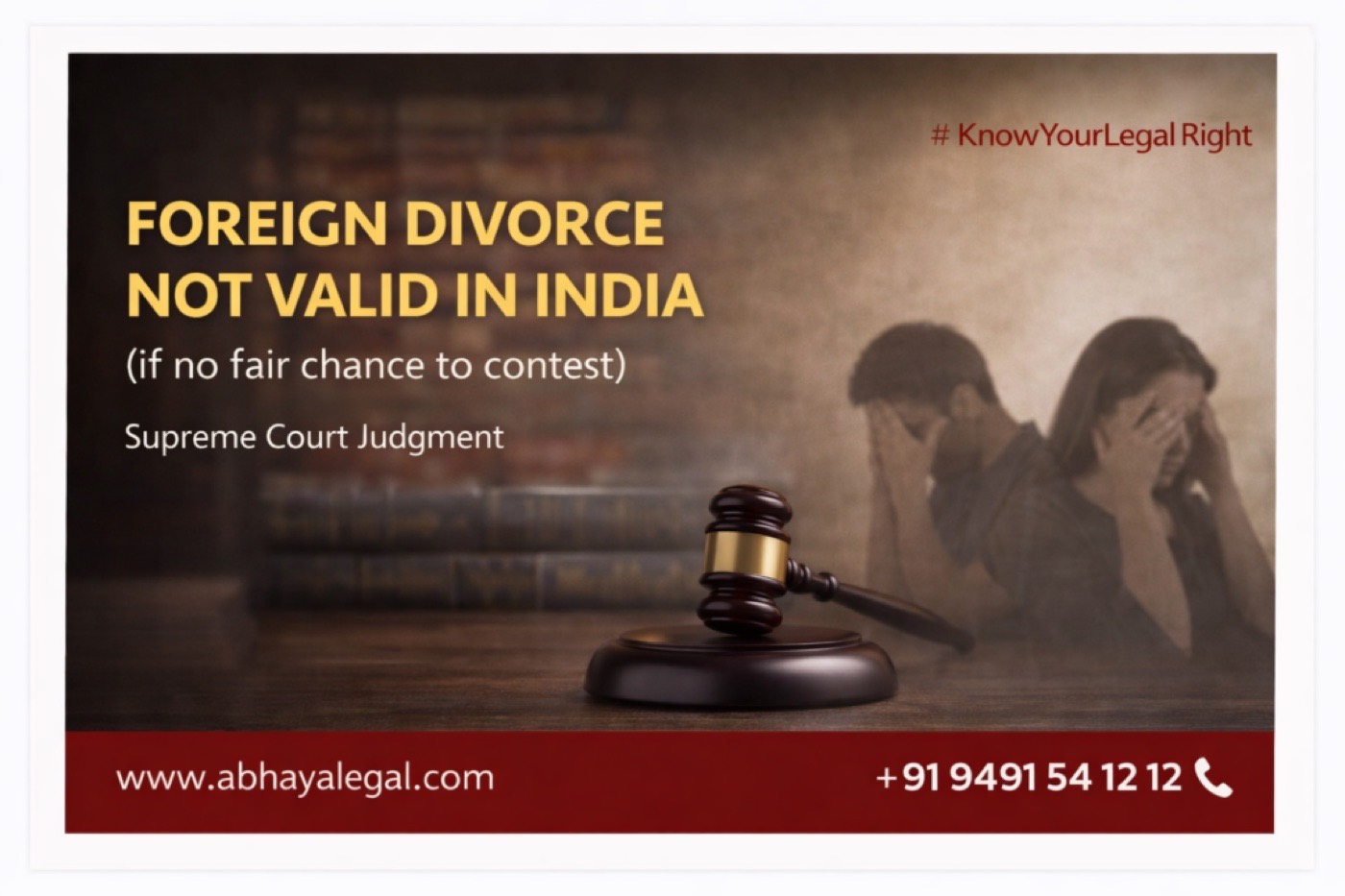
Foreign Divorce Decree Not Valid in India Without Fair Opportunity: Supreme Court
In a recent and important judgment, the Supreme Court of India has clarified that a foreign divorce decree will not be valid in India if one party was not given a meaningful opportOriginal certificates belong to the student, not the institution.
- Colleges and universities have no legal right (no lien) oveunity to contest the case.
This ruling strengthens the protection of individuals, especially in cases where divorce is obtained from foreign courts without proper participation of the other spouse.
- A foreign divorce decree cannot be enforced in India if it violates principles of natural justice.
- If one party did not get a fair chance to present their case, the decree is not valid.
- Mere passing of a decree by a foreign court does not automatically make it enforceable in India.
The Court emphasized that proper hearing and fair opportunity are essential for any judgment to be recognised under Indian law.
- The affected party must have real and effective participation in the proceedings
- Proper notice must be served
- The person should have adequate time and ability to defend the case
If these conditions are not satisfied, the decree will be treated as invalid in India.
Under Indian law (Section 13 of the Civil Procedure Code):
- It is passed without jurisdiction
- It is against Indian law
- It violates principles of natural justice
- It is obtained by fraud
- It is based on grounds not recognised under Indian law
- Protects Spouses from Unfair Foreign Divorces
Many individuals obtain divorce abroad without informing the other party.
This judgment prevents misuse of foreign legal systems.Even if a divorce is granted abroad, Indian courts will verify:
- Whether proper procedure was followed
- Whether both parties were heard
If a divorce is granted without participation of one spouse, it may not be recognised in India.
Your enquiry has been received. Our team will contact you soon.
Need legal help with this?
Talk to our advocates about your situation — we reply within 24 hours.
Book a Consultation